Phone:
0086-757-8938 9313
Email:
Address:
Caochang Industrial Zone, Liguang Rd, Lishui, Nanhai, Foshan, Guangdong, China
24/7 online services

Phone:
0086-757-8938 9313
Email:
Address:
Caochang Industrial Zone, Liguang Rd, Lishui, Nanhai, Foshan, Guangdong, China
24/7 online services
The useful connection between glamping tents and advertising tents is not that they are the same market. It is that buyers increasingly think about what an outdoor space must do: welcome people, support an activity and be practical to operate. For event buyers, that makes the layout, graphics, installation and complete operating package as important as the roof shape.
The Chinese report behind this discussion covers hotel-style tent accommodation, modular outdoor rooms and leisure shelters. Its examples concern tourism and outdoor living. They should not be used as evidence that branded event tents are growing at the same rate, or that an advertising-tent manufacturer has the same order book.
For the advertising-tent sector, the report is a prompt to ask better product questions. Can a shelter support reception, sampling, hospitality or a demonstration? Can the crew transport, install and maintain it? Does the supplier explain the proposed configuration clearly? These are useful questions even without a market-growth forecast.
A visible logo helps people find a stand. Once they arrive, the space still has to work. Counters need room behind them, visitors need a clear approach and stock should not obstruct an exit. A hospitality shelter needs a different layout from a product demonstration or a race-registration point.
| Buyer | Main job | Requirement to put in the brief |
|---|---|---|
| Brand activation agency | Maintain a consistent presentation across events | Artwork control, orientation and repeat-order references |
| Event rental company | Reuse the kit with predictable handling | Complete components, inspection records and parts compatibility |
| Distributor | Supply the right product and support it afterward | Model-linked specifications, packing and service information |
| Hospitality or venue operator | Create a useful gathering area | Furniture layout, access, surface and venue approval |
| Sports-event team | Receive or serve visitors efficiently | Queue layout, operating hours and setup window |
This is where product development can add value: making the structure and graphics fit the activity, rather than adding features that the buyer cannot use.
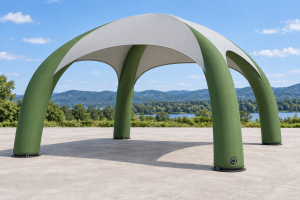
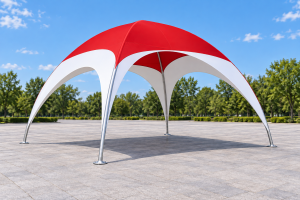
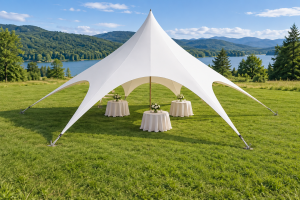
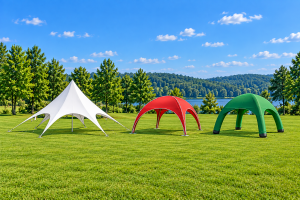
BESDA BRANDING TENT offers these three product ranges. They are alternatives to evaluate, not interchangeable names for one structure.
| Product type | Structural distinction | Potential buyer benefit | Point to resolve |
|---|---|---|---|
| Arc tent | Curved rigid frame supporting a shaped canopy | A distinctive shape with an opening that can suit the display | Exact frame, useful clearance, anchoring and artwork template |
| Star tent | Tensioned roof, typically with a center mast and perimeter anchors | A recognizable gathering point with a shaped shaded area | Mast position, usable layout and complete anchor footprint |
| Inflatable tent | Air-supported structure; airtight or continuous-air construction | A different transport and assembly approach to evaluate | Air system, equipment, power, monitoring and repair procedure |
A small promotional arc shelter is not the same as a large structural arcum marquee. A star tent’s nominal diameter is not its usable floor area. An inflatable canopy is not automatically faster to erect, lighter to ship or suitable for accommodation. Compare model-specific information before choosing.
Ask what each component is made from. For fabric, record composition, mass in g/m2, coating, reinforcement and seam treatment. Denier alone does not establish fabric thickness, opacity, waterproofness or service life. For a metal frame, identify the component, material, section and wall thickness. For an inflatable structure, distinguish the outer sleeve from the airtight element and record the valve and chamber arrangement.
Performance claims need their own evidence. Fabric water resistance is not a guarantee that every opening of an assembled tent stays dry. A fire-performance report must apply to the relevant material and be accepted for the intended venue. A wind claim without configuration, anchoring and operating conditions is not an installation plan.
Request the erected plan and elevation, clear heights, actual roof shape and complete installation envelope. Include anchors, guy lines, ballast where specified, circulation and neighboring stands. Send actual furniture dimensions rather than only a headcount.
For a touring kit, also compare package count, longest package, gross weight, handling and storage. A shelter that fits the event but not the delivery route creates an avoidable problem. Keep the intended wall arrangement in the brief because it changes both the working layout and the configuration to be evaluated.
The meaningful differences between proposals are often specific: a model-linked drawing, a clear bill of components, a controlled artwork proof, an agreed inspection scope and identifiable replacement parts. These help the buyer check what will arrive and how it can be used.
For BESDA BRANDING TENT, the starting advantage is access to arc, star and inflatable product options through one inquiry. BESDA BRANDING TENT serves buyers in 150+ countries and has received five-star customer feedback. For your own order, turn that international experience into a specific brief: destination, venue, layout, graphics and required arrival date. Ask for the model-linked proposal, documents and samples that let you assess the product against your event. Confirm certifications and performance requirements for the exact configuration rather than assuming that every model has the same specification.
The general production route includes confirming the specification and artwork, preparing materials, printing and finishing, cutting and joining panels, assembling components, inspecting the kit and packing it. The exact route depends on the textile and structure. Agree which checks apply to the order and how the results will be recorded.
If a setup-time claim matters, ask what was timed. Unpacking, roof erection, anchoring, walls, electrical checks and final inspection are separate stages. Record crew size and site conditions. A short inflation video is not evidence of an event-ready installation time.
Installation must follow the supplied model’s manual and an appropriate site-specific anchoring arrangement. Have the responsible venue professional resolve approvals and operating limits. Do not substitute a generic ballast number or a favorable weather photograph for that process.
Reusable graphics and serviceable components can help a tent work across campaigns, where compatibility is confirmed. Keep the model, drawing revision and final artwork together so replacement requests are precise. Inspect attachments, fabric and structural components before each use; clean according to the instructions and pack the textile dry.
Compare ownership cost through purchase, delivery, labor, power if required, cleaning, storage, replacement parts and downtime. A lower initial price is not necessarily a lower event cost. An omitted item should be marked unquoted, not treated as free.
Send a site and activity brief, select a proposed model, compare the itemized quotation, approve the specification and artwork, complete any agreed sample approval, then confirm production, inspection and shipment milestones. Put payment terms, inclusions and the required arrival date into the order. Factory dispatch and event readiness are different dates.
That process turns industry interest into a purchasing decision. It also gives the supplier a concrete problem to solve: the right shelter, graphics and operating package for a particular event.
No. Its central examples concern glamping accommodation and outdoor leisure products. The connection to advertising tents is a product-planning interpretation, not a measured advertising-market growth claim.
Start with the activity, plot, surface, anchoring permissions, access, power and event schedule. Compare the proposed layouts against those constraints.
A model-linked specification and drawing, full component list, artwork approval record, relevant supporting documents, agreed inspection scope and written delivery milestones.
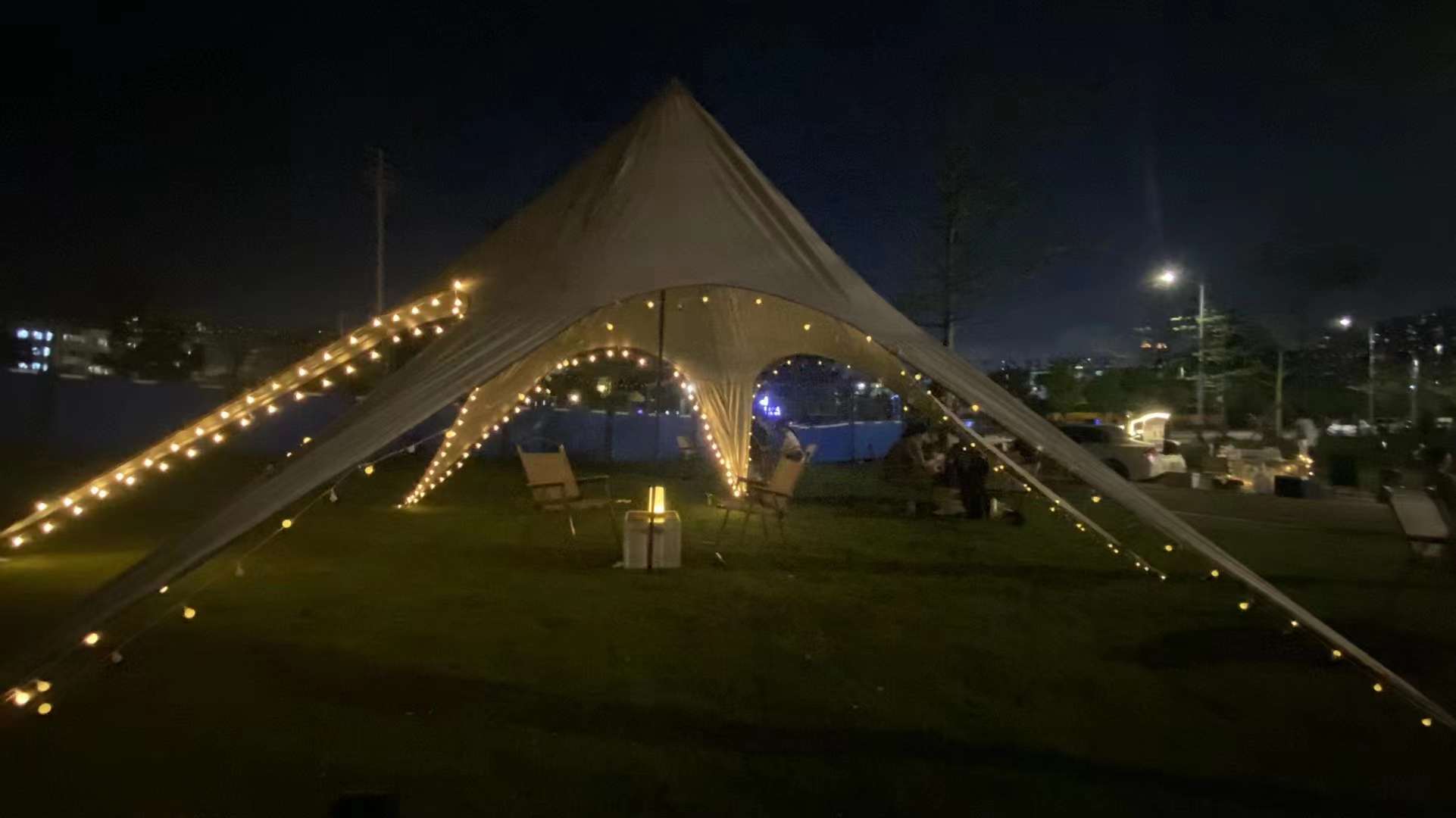
Existing website image of an evening event shelter; confirm the supplied model and any lighting arrangement separately.
Tell BESDA BRANDING TENT your country, event activity, available dimensions, ground surface, quantity, logo requirements and required arrival date. Include venue documents where available.
Discuss My Project on WhatsApp